
 By IQnewswire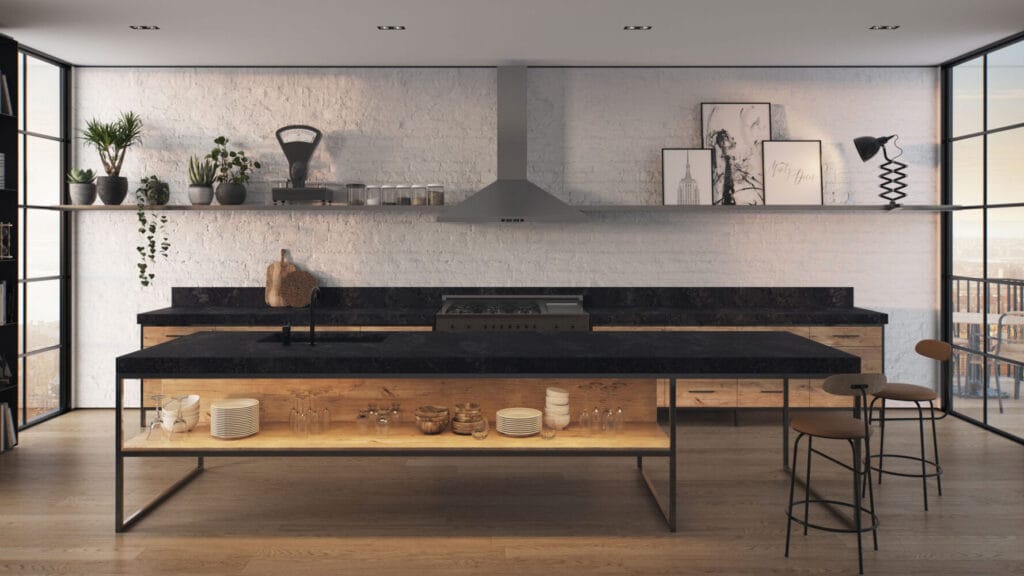
Quartz has liberated kitchen design from the constraints of natural stone. No longer bound by the random patterns and limited colour palettes of quarried materials, designers and homeowners now wield an unprecedented tool for creativity. Quartz worktops are not just a surface; they are a foundational design element that can dictate the mood, style, and flow of an entire space. This article explores how to harness the vast aesthetic potential of quartz, from making bold statements with veining and colour to integrating it seamlessly into any design philosophy.
The first step in designing with quartz is understanding its core aesthetic advantage: consistency with versatility. Unlike a granite slab where the pattern is a beautiful surprise, quartz offers predictable beauty. This allows for precise, intentional design. For large kitchens, especially those with expansive islands or peninsulas, this consistency is transformative. You can select a slab with a specific vein flow and know it will continue seamlessly across the join, creating a harmonious, fluid surface. This capability enables dramatic effects like “book-matching,” where adjacent slabs are mirrored to create a symmetrical, Rorschach-like pattern that becomes a stunning focal point. It’s a level of artistic control simply impossible with most natural stones.
Colour and pattern selection is where personal expression truly takes flight. The spectrum is boundless. For those seeking timeless elegance, the brilliant whites and intricate grey veining of Calacatta or Statuario marble replicas are overwhelmingly popular. These designs offer the opulent drama of marble without its susceptibility to etching and staining, making luxury practical. On the other end of the spectrum, pure, saturated colours hold immense power. A deep, onyx-black quartz can create a sleek, ultra-modern or moody, atmospheric kitchen, reflecting light in a polished finish or absorbing it in a honed one. Softer, uniform colours like warm greys, creams, or putty tones are the heroes of minimalist, Scandinavian, or transitional styles, providing a quiet, textured backdrop that lets cabinetry and hardware shine.
Beyond colour, the finish of the Quartz worktops dramatically alters the space’s feel. A high-gloss polish reflects light, making smaller kitchens feel larger and more vibrant, and emphasises the depth of veining. A honed or matte finish offers a contemporary, soft-touch aesthetic that conceals fingerprints and light scratches more easily, lending a more understated, tactile luxury. Some manufacturers even offer textured finishes that mimic the feel of natural concrete or rough-hewn stone, adding a raw, industrial edge. This choice of finish is as crucial as the colour itself in defining the worktop’s character.
Integration with other elements is the final, critical design act. Quartz should converse with your cabinetry, flooring, and splashback. The principle of contrast and complement is key. Dark quartz on light cabinets creates a bold, graphic statement. Light quartz on dark cabinets feels crisp and modern. For a harmonious, tonal look, pair grey-veined quartz with grey painted cabinetry or match warm-toned quartz with wood stains. The worktop also dictates the splashback strategy. A continuation of the quartz up the wall (a full-height splashback) creates a seamless, monolithic look that is ultra-modern and easy to clean. Alternatively, using the quartz as a upstand against a contrasting tile splashback can frame and highlight both materials beautifully.
Finally, don’t neglect the profile the edge detail. This is the jewellery of the worktop. A simple pencil or eased edge suits modern spaces. A thick, chunky bullnose or ogee edge adds traditional gravitas. A dramatic waterfall edge, where the quartz continues down the side of an island to the floor, is a contemporary showstopper that turns the worktop into architectural sculpture. Each choice refines the style. In essence, designing with quartz is an exercise in informed creativity. It provides a vast, reliable palette from which to paint your perfect kitchen, ensuring the final result is not just a collection of parts, but a cohesive and personally resonant design.