
 By IQnewswire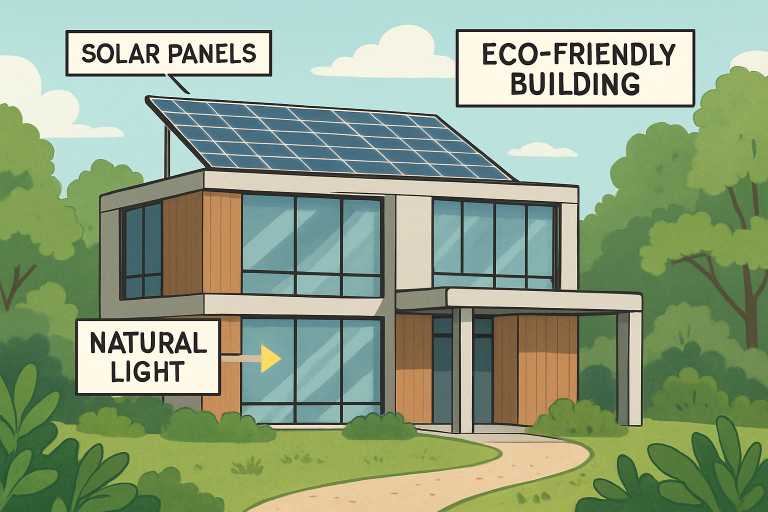
Key Takeaways
- Innovative materials and techniques are revolutionizing the construction industry towards sustainability.
- Net-zero energy buildings are becoming the new standard in eco-friendly construction.
- Government incentives and policies are accelerating the adoption of green building practices.
Introduction
The construction industry is entering a new era, where sustainability is no longer just a preference but a central obligation. As buildings account for nearly 40% of worldwide energy-related emissions, finding and implementing eco-friendly solutions is crucial for both environmental and economic resilience. New approaches and modern technologies are not only minimizing negative impacts but also paving the way for a transformation of the industry. Companies dedicated to adopting green practices, such as those highlighted on Koehncs.com, are driving this shift and inspiring a broader movement across the industry.
As urban populations continue to grow and demand for real estate intensifies, the need for sustainable construction becomes increasingly urgent. Developers, architects, and policymakers are collaborating on innovative strategies that strike a balance between functionality, aesthetics, and environmental stewardship.
The ramifications are global: sustainable construction addresses not only climate change and resource scarcity but also worker well-being, operational efficiency, and cost savings. The pace of advancement signals a promising future for both industry professionals and daily citizens seeking greener communities.
A critical facet of this change is the increasing popularity of net-zero structures, which provide a benchmark for what is achievable when dedication meets innovation. Governments and organizations worldwide are rapidly aligning their standards and policies to accelerate this evolution. Explore Time’s insights into the rise of net-zero emissions buildings.
Innovative Materials Redefining Construction
The development and adoption of sustainable building materials are fundamentally altering how buildings are conceived and constructed. New materials, such as cross-laminated timber (CLT), are gaining prominence due to their remarkable blend of strength, lightweight properties, and ability to store carbon. CLT enables faster builds and reduces reliance on traditional, energy-intensive materials.
Stockholm’s ambitious “Wood City” project exemplifies this trend, showcasing the potential of mass timber to deliver lasting environmental and economic benefits. Projects like these showcase how integrating renewable materials from the outset can help large-scale urban areas significantly cut their carbon emissions while fostering new architectural possibilities. According to Time, timber construction is gaining traction globally as it complements both sustainability and modern design sensibilities.
Net-Zero Energy Buildings: The New Standard
The goal of net-zero energy—where buildings generate as much renewable energy as they consume annually—is swiftly becoming synonymous with cutting-edge real estate development. Innovations such as improved photovoltaic panels, advanced geothermal heating and cooling systems, and highly efficient insulation and windows are making zero net emissions increasingly attainable. Integrating passive design principles, such as optimized orientation and natural ventilation, further reduces energy requirements.
Net-zero neighborhoods are surfacing in many countries, acting as testbeds for new technologies and demonstrating the viability of energy-independent living. These projects not only shrink the environmental impact but also offer lower operating costs and future-proofed infrastructure against changing climatic conditions.
Embracing Circular Construction Practices
A circular economy model is guiding the next wave of sustainable construction, shifting focus from consumption and disposal to reuse and regeneration. Instead of demolishing old buildings and sending debris to landfills, the deconstruction process salvages valuable materials—such as wood, metal, and concrete aggregates—for reuse in new projects.
This practice not only conserves natural resources but also fosters community development and job creation. Research from the Environmental Protection Agency (EPA) shows that deconstruction creates as many as eight jobs per project, compared to traditional demolition methods, thereby extending the economic benefits of sustainability beyond environmental stewardship.
Technological Innovations Driving Sustainability
Sophisticated technology is now at the heart of sustainable construction. The emergence of 3D printing in building processes permits precision manufacturing, reducing excess by as much as 50% while still delivering robust structures. This results in cost and material savings, significantly reducing the project’s environmental impact.
Meanwhile, Building Information Modeling (BIM) is improving project planning and resource management. Material passports—a growing digital trend—track every component used in construction, enabling future reuse or recycling. By providing transparency and traceability, these tools are key enablers of circular construction ecosystems.
Government Policies and Incentives
Policy-driven incentives remain pivotal for mainstreaming green construction. National and municipal governments are introducing frameworks that reward energy efficiency, sustainable procurement, and innovation. For example, Singapore’s Green Mark program facilitates massive retrofitting efforts, while China’s commitment to make all new urban buildings meet green standards by 2025 signals the global scope of these advancements.
Tax credits, grants, streamlined permitting processes, and mandatory disclosures are being adopted in many regions to tilt the market further toward sustainability. According to Time, policy mechanisms are essential for closing the gap between emerging technologies and widespread industry adoption.
Challenges and Future Outlook
Despite growing momentum, integrating sustainable practices is not without obstacles. Barriers such as higher initial costs, fragmented regulations, limited awareness, and cultural resistance must be overcome. However, as the benefits of sustainable methods become clearer and supply chains mature, adoption rates are expected to climb steadily.
The future of construction hinges on the willingness of stakeholders to adopt whole-systems thinking, prioritizing long-term value over short-term gains. Enhanced collaboration and knowledge sharing across the industry will accelerate these vital transitions, securing a greener landscape for generations to come.
Conclusion
Sustainable construction is poised to become the backbone of future growth and development. From mass timber and net-zero standards to circular economy models and technology-driven efficiencies, the pathways to greener construction are expanding rapidly. Collaborative efforts by industry leaders, governments, and innovators will forge a built environment that meets both human needs and planetary boundaries. The journey is clear: adopting sustainable construction methods is essential for a resilient and thriving future.